Physical Address
304 North Cardinal St.
Dorchester Center, MA 02124
Physical Address
304 North Cardinal St.
Dorchester Center, MA 02124

The Future of Work with AI: Transformations and Trends
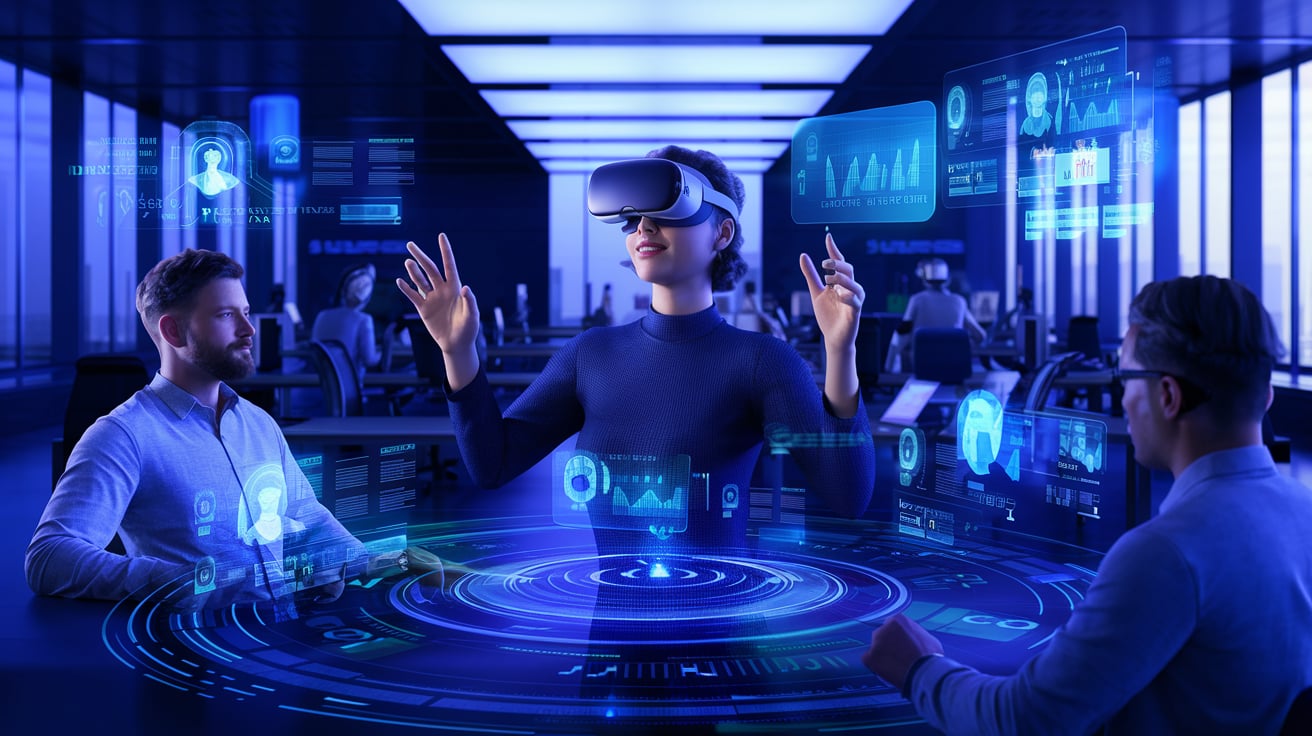
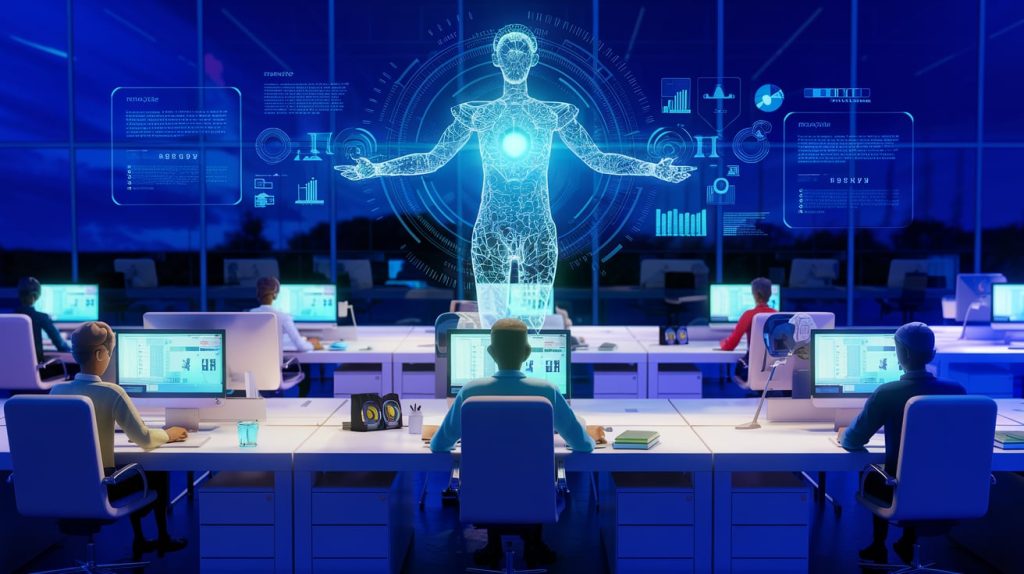
Artificial intelligence (AI) has rapidly evolved from a futuristic concept to a fundamental part of our everyday lives. It is revolutionising industries, reshaping job roles, and redefining how businesses operate. The workplace is undergoing seismic shifts as AI-driven tools and processes become increasingly embedded in daily operations. In this article, we explore the impact AI has had so far, where it’s headed, and what it means for professionals, businesses, and society.
AI applications have been integrated into multiple industries, including healthcare, finance, retail, manufacturing, and more. Businesses leverage AI for tasks such as:
Discover Your AI Work Style! Answer a few fun questions to reveal which AI-powered tool matches your work style best—from a data-crunching analyst bot to a creative assistant AI.
[Start the Quiz Now]
AI tools streamline tasks, allowing employees to focus on more strategic and creative responsibilities.
Data-driven insights provide leaders with a clearer understanding of market dynamics, customer needs, and operational inefficiencies.
AI tailors products, services, and experiences to meet individual preferences, enhancing customer satisfaction.
Automating processes reduces operational costs, enabling companies to allocate resources more effectively.
While AI offers numerous advantages, its adoption also presents challenges.
Certain roles are becoming obsolete as automation takes over routine tasks. However, this also opens up opportunities for roles that require human creativity, empathy, and strategic thinking.
Questions about data privacy, bias in AI algorithms, and accountability need to be addressed.
Organisations must invest in upskilling their workforce to bridge the gap between traditional roles and new AI-driven demands.
Imagine you are the CEO of a company integrating AI. How would you balance efficiency, ethics, and employee well-being? Share your solutions on [TechNector Forums] and engage with other readers.
Rather than replacing human workers, AI is increasingly being used to augment human capabilities. Examples include tools that assist doctors in diagnostics or AI-driven writing aids.
AI-powered collaboration tools are enabling seamless communication and task management for remote teams.
From resume screening to candidate assessment, AI helps HR teams identify the best-fit candidates more efficiently.
AI personalises employee training programs, tailoring content to individual learning styles and needs.
Step into the shoes of an HR manager using AI to hire for a tech startup. Make decisions on candidate shortlisting and explore how AI tools impact hiring outcomes.
[Launch Simulation]
To thrive in the evolving workplace, both individuals and organisations must adapt.
Test your knowledge about AI trends and applications with our quick quiz. Score 80% or higher and receive a “TechNector AI Master” badge!
[Take the Quiz]
A leading hospital implemented an AI-driven diagnostic tool that reduced patient wait times by 30% and improved diagnostic accuracy by 15%.
An online retailer used AI to personalise customer recommendations, increasing sales conversions by 25%.
A financial institution deployed AI-powered fraud detection systems, reducing fraudulent transactions by 40%.
The future of work is being shaped by AI, but its impact is a shared journey between humans and machines. As we embrace this transformation, the focus must remain on leveraging AI responsibly and inclusively. The organisations and individuals who adapt with resilience, creativity, and a commitment to lifelong learning will lead the charge in this new era.
Stay ahead of the curve by exploring more insights, interactive tools, and success stories on TechNector. Let’s navigate the AI-driven future together.


